Measuring Your Interval-Walking Progress: The Markers That Show It's Working
Interval walking’s research pedigree includes measurable gains — the fitness, blood pressure and strength improvements from the Japanese studies — and the home practitioner can track the same markers with a watch and a calendar. The IWT progress guide: what moves, how to test it and what to do when it stalls.

What the Research Says Moves
The documented gains: the aerobic-fitness lift (the original Japanese trials showing meaningful VO2-adjacent improvements over months — the fast intervals doing what steady strolls don’t), the blood-pressure effect (the reductions in the study populations — the marker your doctor tracks anyway; the medical-checkup synergy), the leg-strength gains (the thigh-strength improvements in the trials — the fast-walking phases as low-grade strength work for aging legs), the metabolic markers (the blood-sugar and body-composition shifts in longer studies — the after-meals walking chemistry compounding), and the timeline honesty (the study effects measured over five months of consistent practice — the marker movement is a season’s project, not a fortnight’s; the patience calibration up front).
The Self-Test Toolkit
Measuring at home: the fast-phase pace test (the same 3-minute fast interval on the same flat route monthly — the distance covered or pace held as the fitness marker; the watch’s lap function as the lab), the talk-test calibration (the fast phase that once broke sentences now allowing them — the effort-at-same-pace dropping being the classic adaptation sign), the resting-heart-rate trend (the morning pulse drifting down across months — the cheap cardio marker from the fittech chapter; the trend over any single day), the stairs-and-hills life test (the flight that used to wind you — the daily-life breathlessness audit as the most honest marker), the blood-pressure log (the home cuff readings if you track them — the doctor-visit numbers as the official record), and the journal layer (the energy, sleep and mood notes — the quality-of-life markers the studies also measured; the subjective data that’s still data).
The Plateau-Busting Progressions
When the markers stall: the fast-phase honesty audit (the ‘fast’ that drifted comfortable — the interval that should feel like effort; the talk-test recalibration upward), the volume step (the five-set standard grown to six-seven — the total fast minutes as the dose; the research protocol as floor, not ceiling), the terrain upgrade (the hill intervals — the incline fast-phases that renew the stimulus; the route library’s hilly loop promoted), the pole-walking option (the Nordic-style poles adding upper body — the full-body variant with its own evidence), the strength-training partner (the IWT plateau often being a strength ceiling — the twice-weekly resistance work from the strength chapters unlocking faster fast-phases), and the deload note (the stall after months of consistency sometimes wanting an easy week — the recovery-then-retest pattern before program surgery).
The Long-Game Frame
Progress kept in perspective: the consistency metric (the sessions-per-week completed being the leading indicator — the marker that predicts every other marker; the three-times-weekly floor from the beginner chapter), the age-honest calibration (the sixty-year-old’s progress measured against her own baseline — the trials’ older populations improving robustly; the comparison-to-self doctrine), the maintenance legitimacy (the plateau at a good level being SUCCESS — the fitness held across years counting as the win it is; the forever-progress myth retired), and the celebration practice (the marker milestones marked — the pace PR, the blood-pressure improvement shared with the doctor; the visible progress that funds the next season’s consistency). Test monthly, progress the dose, honor the plateau: the walking, measurably working.
Track a monthly fast-interval pace test, resting heart rate and the stairs feel — expect movement over months, not weeks. Stalls answer to honest fast phases, hills and strength work.
See It in Motion
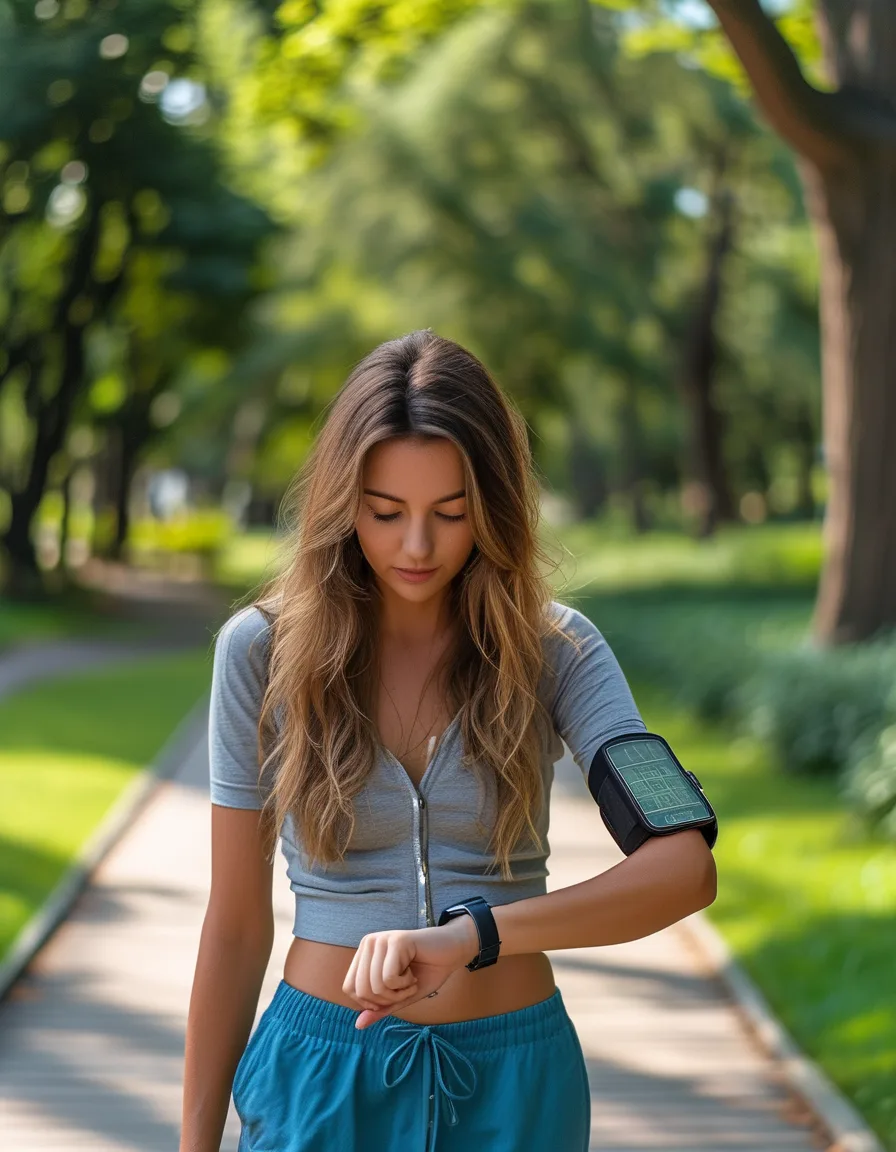
Seen here: High Waist 8” Yoga Shorts — shop similar styles on bubblelime.com
Keep Reading
This article is for general informational purposes only and is not medical advice. Always consult a qualified health professional for guidance specific to you.