Why the Exact Same Interval Walking Workout Feels Harder on a Treadmill Than Outdoors
Quick Answer: Treadmill interval walking often feels harder than outdoor walking at the same pace because the treadmill belt does some of the work of propelling your leg backward, changing your natural gait slightly, and the lack of natural terrain variation and wind resistance removes small recovery moments outdoor walking naturally provides — combined with indoor heat buildup from less airflow, the same numbers can produce a higher perceived effort indoors.
You program the identical pace and interval structure indoors and outdoors, and the treadmill session leaves you far more drained. That’s a real, explainable difference, not inconsistent effort on your part.
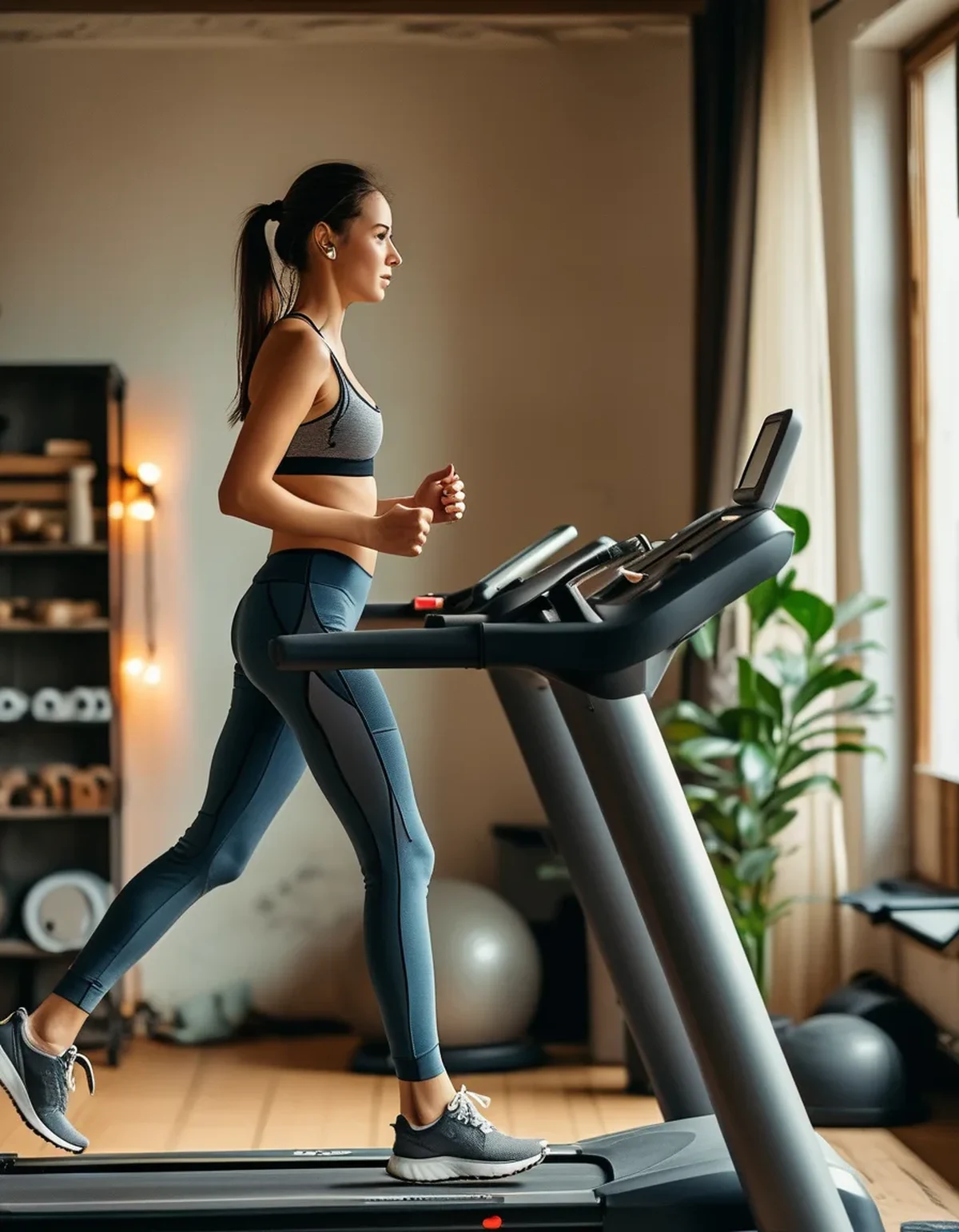
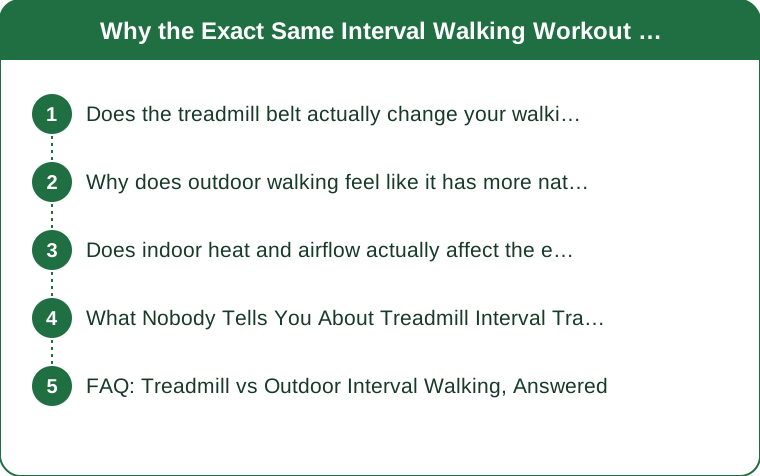
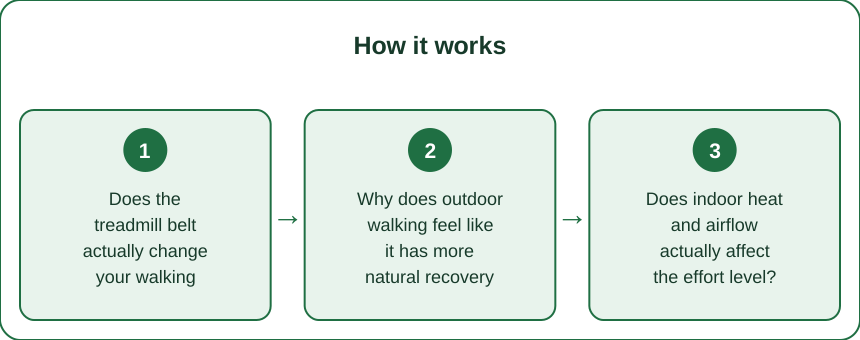
Does the treadmill belt actually change your walking mechanics?
Yes — the moving belt assists in pulling your leg backward through part of the stride, which slightly alters natural gait mechanics compared to pushing off stationary ground outdoors. Some research suggests this changes muscle activation patterns subtly, which can affect how fatigue is distributed and perceived over a session, even at matched pace and incline.
This isn’t necessarily worse for training — it’s just mechanically different enough that direct feel-based comparisons between the two aren’t quite apples to apples.
Why does outdoor walking feel like it has more natural recovery built in?
Outdoor terrain naturally varies — slight downhills, pace fluctuations from terrain or crossings, and even brief pauses at corners create micro-recovery moments that a fixed-pace treadmill session doesn’t include. A treadmill set to a specific pace holds you at that exact effort continuously, without the small natural breaks outdoor walking almost always includes.
This is a meaningful difference for total session strain, even when the average pace across both sessions looks identical on paper.
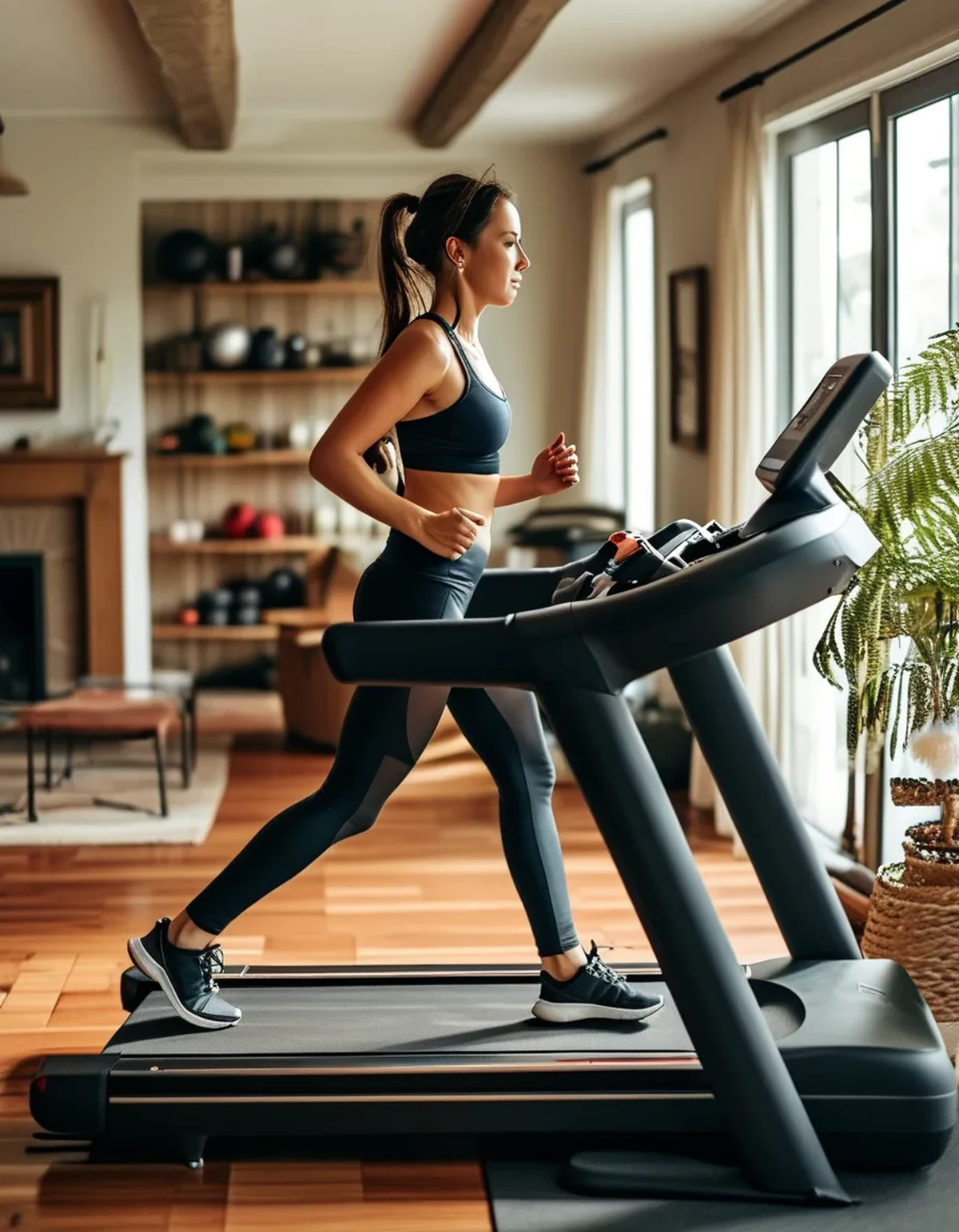
Does indoor heat and airflow actually affect the effort level?
Yes, measurably — reduced airflow indoors means your body has to work harder to dissipate heat through sweat evaporation alone, since a treadmill session lacks the passive cooling effect of wind and ambient air movement that outdoor walking provides. This raises perceived exertion and core temperature faster indoors at the same pace, particularly in a room without strong ventilation or air conditioning.
A fan positioned to blow across your body during treadmill sessions is a simple, low-cost way to reduce this specific gap.
What Nobody Tells You About Treadmill Interval Training
Nobody tells you that treadmill incline is worth using specifically to compensate for the missing wind resistance and terrain variation, not just to simulate hills — a slight 1-2% incline on a treadmill is commonly recommended to better approximate the true effort of outdoor walking at the same pace. Without any incline, flat treadmill walking is generally considered easier than flat outdoor walking at an identical pace.
They also don’t tell you that the visual monotony of a treadmill can independently increase perceived exertion, separate from any physiological difference, simply because time feels slower without changing scenery.
FAQ: Treadmill vs Outdoor Interval Walking, Answered
What incline should I use to make treadmill sessions comparable to outdoor walking?
A 1-2% incline is a commonly cited starting point to roughly account for the missing wind resistance and terrain variation of outdoor walking.
Is one environment better for beginners starting interval walking?
Treadmills offer more consistent pace control, which can help beginners learn to hit target intervals accurately before transitioning some sessions outdoors.
Should I mix both environments in my training?
Yes — many people find alternating keeps the routine engaging and builds fitness that transfers well to both controlled and variable-terrain conditions.
TL;DR:
- The treadmill belt slightly assists your stride, changing gait mechanics compared to outdoor walking
- Outdoor terrain naturally provides small recovery moments a fixed-pace treadmill session lacks
- Reduced indoor airflow raises perceived effort and core temperature faster at the same pace
- A slight 1-2% incline helps treadmill sessions better approximate true outdoor effort
Feeling more drained on a treadmill at identical numbers isn’t in your head — it’s a real combination of mechanics, missing micro-recovery, and heat buildup, and a small incline adjustment closes most of that gap.
See It in Motion
Seen here: High Waist Yoga Leggings with Side Pockets — shop it on bubblelime.com
Keep Reading
This article is for general informational purposes only and is not medical advice. Always consult a qualified health professional for guidance specific to you.