Why Interval Walking Burns More Than a Workout That 'Easy' Has Any Right To
Quick Answer: Interval walking (alternating brisk and easy-paced walking) produces a bigger metabolic effect than its moderate perceived effort suggests because the repeated intensity surges elevate heart rate into a genuinely higher training zone multiple times per session, and that repeated fluctuation triggers a more favorable metabolic response than steady-pace walking at an average intensity, even though neither pace individually feels especially hard.
None of the three-minute brisk intervals feel brutal on their own. But stacked together across a session, they add up to a metabolic workload that a single steady pace at the same average speed simply doesn’t match.

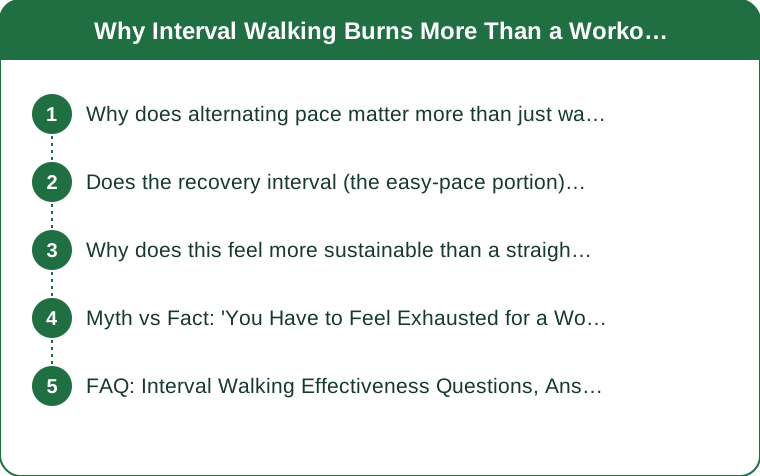
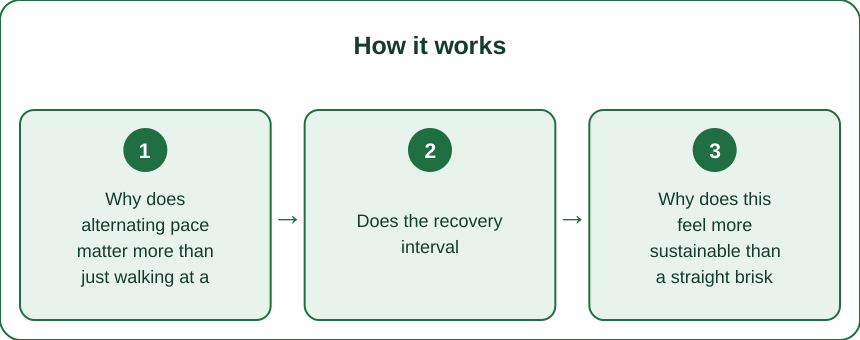
Why does alternating pace matter more than just walking at a consistent, moderately brisk speed the whole time?
Repeatedly pushing heart rate up into a higher zone and then letting it partially recover, over and over, creates a different metabolic demand than sustaining one middle-ground pace throughout — this interval pattern is well documented in exercise science as producing greater improvements in cardiovascular fitness and metabolic markers than steady-state exercise at the same average intensity.
Does the recovery interval (the easy-pace portion) actually matter, or is it just a rest period?
It’s an active part of the training effect, not just a break — the recovery walk keeps the body in active movement while heart rate comes back down, which supports better lactate clearance and prepares the body for the next brisk interval, allowing each subsequent hard interval to be genuinely effective rather than degraded by accumulated fatigue from a lack of active recovery.

Why does this feel more sustainable than a straight brisk walk at the same average pace?
Perceived exertion resets somewhat during each recovery interval, which makes the overall session feel considerably more manageable even though the total metabolic workload is higher — this is part of why interval walking has strong long-term adherence in research, since it delivers a bigger training effect while feeling more approachable session to session than sustained higher-intensity effort.
Myth vs Fact: ‘You Have to Feel Exhausted for a Workout to Count’
Myth: if interval walking doesn’t leave you gasping and drenched, it’s not doing much. Fact: the interval structure itself, not subjective exhaustion, is what drives the enhanced metabolic and cardiovascular benefit — feeling only moderately challenged during the session is completely consistent with it being genuinely more effective than a harder-feeling but steady-pace walk covering the same distance.
FAQ: Interval Walking Effectiveness Questions, Answered
What’s a reasonable interval structure for someone just starting interval walking?
A common beginner structure is 3 minutes brisk (a pace where talking is difficult) followed by 3 minutes easy, repeated for 20-30 minutes total, which is enough to produce the interval effect without requiring advanced fitness to sustain.
Does interval walking replace the need for any higher-intensity training entirely?
Not necessarily — interval walking is an excellent accessible entry point and maintenance tool for cardiovascular fitness, but athletes with specific higher-intensity performance goals typically still benefit from adding some dedicated higher-intensity training beyond walking intervals.
How soon do people typically notice the fitness improvements from switching to interval walking?
Many studies on interval walking training show measurable cardiovascular and metabolic improvements within 8-12 weeks of consistent practice, several times per week, which is a comparable timeline to other moderate-intensity training approaches.
TL;DR:
- Interval walking’s repeated heart-rate surges produce a bigger metabolic effect than steady-pace walking at the same average speed
- The easy-pace recovery interval is an active part of the training effect, supporting lactate clearance, not just a rest period
- Perceived exertion resetting during recovery intervals makes a genuinely harder total workload feel more manageable
- Feeling only moderately challenged doesn’t mean the session isn’t working — the interval structure is doing the heavy lifting
The mismatch between how it feels and what it does is the actual point — that’s what makes interval walking sustainable enough to keep doing consistently.
See It in Motion
Seen here: Super High Waist Embossed Yoga Leggings with Inner Pocket — shop it on bubblelime.com
Keep Reading
This article is for general informational purposes only and is not medical advice. Always consult a qualified health professional for guidance specific to you.