The Heart Rate Zones That Make Interval Walking Actually Work
Interval walking training only works because of a specific intensity contrast between the fast and slow phases, and most people doing it walk their fast intervals too gently to trigger the actual benefit. Heart rate is the simplest way to check whether the intervals are doing their job.

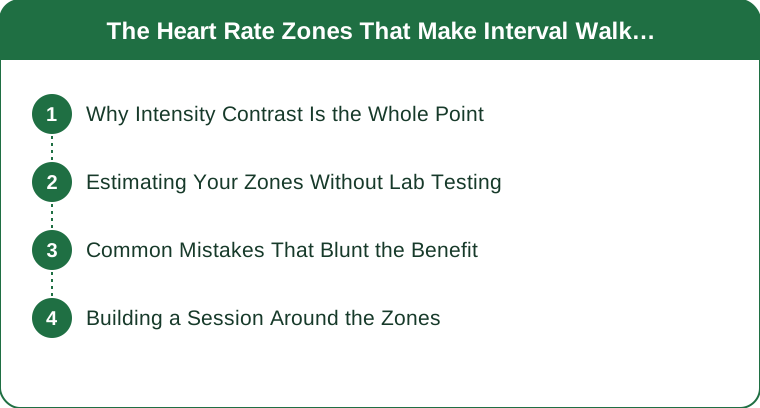
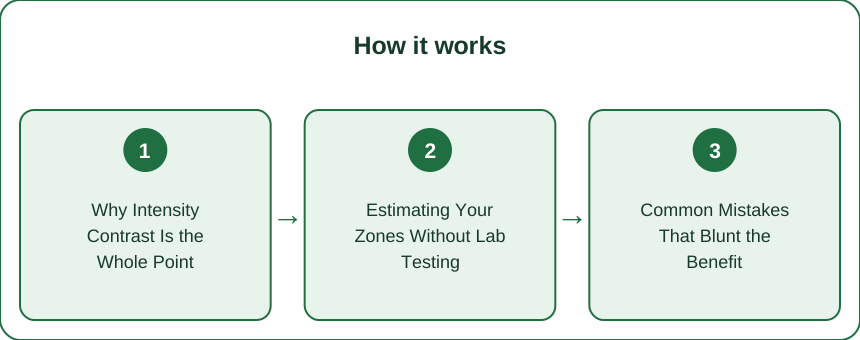
Why Intensity Contrast Is the Whole Point
The mechanism: the the-fast-interval-target-zone (the fast phase of interval walking training needing to reach roughly seventy to eighty percent of estimated maximum heart rate to produce the fitness adaptations the method is known for), the the-slow-interval-recovery-zone (the slow phase deliberately dropping well below that, often to a comfortable fifty to sixty percent range, to allow genuine recovery before the next fast bout), the the-contrast-not-average-effect (the benefit coming from the contrast between zones repeated multiple times, not from an average pace that sits somewhere in the middle the whole session)).
Estimating Your Zones Without Lab Testing
The practical method: the the-age-based-formula-starting-point (a simple age-based maximum heart rate estimate, such as 220 minus age, providing a reasonable starting point for calculating target zones without needing a lab test), the the-talk-test-cross-check (using the talk test alongside heart rate numbers, where the fast interval should make full sentences difficult but not impossible, as a sanity check on the number-based target), the the-wearable-accuracy-caveat (wrist-based heart rate monitors being reasonably accurate for walking intensities but worth cross-checking periodically against a chest strap if precision matters)).

Common Mistakes That Blunt the Benefit
The errors: the the-fast-interval-too-easy (the most common mistake being a fast interval that doesn’t actually reach the target zone, often because the walker unconsciously paces for comfort rather than intensity), the the-slow-interval-too-fast (the opposite mistake of not slowing down enough during recovery intervals, which prevents genuine recovery and turns the session into one long moderate walk), the the-terrain-ignoring-effect (walking the same fixed pace regardless of incline or terrain, when heart rate should be the actual target and pace should adjust to hit it).
Building a Session Around the Zones
The structure: the the-three-minute-interval-standard (the common interval-walking-training protocol using three minutes fast followed by three minutes slow, repeated five or more times), the the-warm-up-before-first-fast-interval (a short warm-up walk before the first fast interval to avoid an abrupt heart rate spike from a cold start), and the frame (interval walking training works because of the zone contrast, not the total distance covered — checking heart rate during the fast phase is the simplest way to confirm the workout is actually doing what it’s supposed to.)
The entire premise of interval walking training rests on a heart rate contrast that many walkers never actually hit, defaulting instead to a fast interval that feels brisk but doesn’t reach the seventy-to-eighty-percent zone the method depends on. Checking heart rate during the fast phase, even with a basic age-based estimate and a wrist-based wearable, is the simplest way to confirm the workout is doing its job rather than just feeling like effort. The slow interval matters just as much in the other direction — dropping heart rate well down before the next fast bout is what allows the contrast to repeat effectively across a full session. The classic three-minutes-fast, three-minutes-slow structure, repeated five or more times, is built entirely around this alternating zone pattern. Distance and total time are secondary to whether the zones were actually hit, which makes heart rate the metric worth watching, not pace alone.
See It in Motion
Seen here: High Waist Jogger Sweatpants with Pockets — shop it on bubblelime.com
Keep Reading
This article is for general informational purposes only and is not medical advice. Always consult a qualified health professional for guidance specific to you.