Interval Walking vs. Steady Walking: What Actually Changes the Results
Quick Answer: Interval walking — alternating brisk and moderate paces — has shown meaningfully better improvements in cardiovascular fitness and blood sugar management compared to steady-pace walking at the same total duration, largely because the brisk intervals push effort into a higher, more training-stimulating zone that steady walking alone rarely reaches.
Both are genuinely good exercise, but if the goal is measurable fitness improvement rather than just movement, the format matters more than most walkers assume.

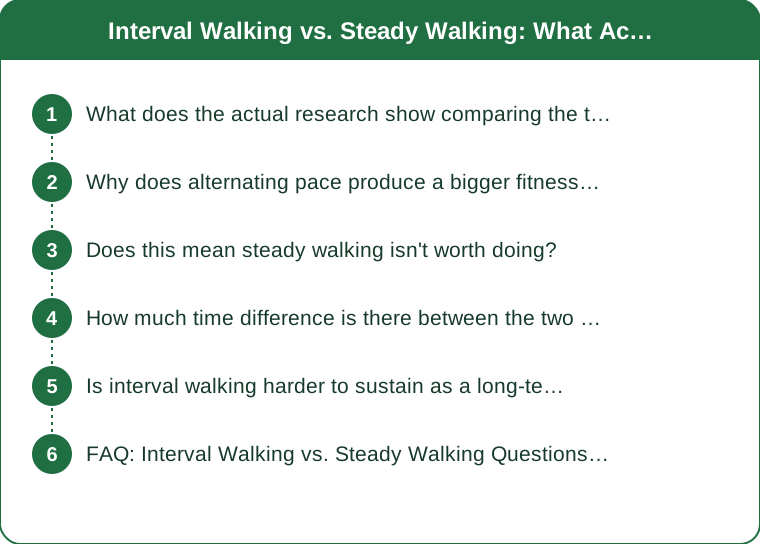
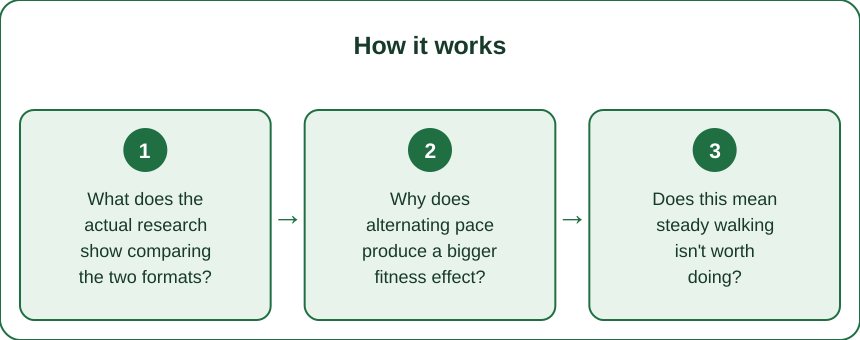
What does the actual research show comparing the two formats?
Studies on interval walking training (alternating roughly 3 minutes brisk with 3 minutes moderate) have shown greater improvements in VO2 max and blood glucose control compared to continuous moderate walking of equal total duration, particularly in middle-aged and older adult populations studied.
Why does alternating pace produce a bigger fitness effect?
Steady walking, even at a brisk pace, rarely pushes heart rate into the higher-intensity zones associated with meaningful cardiovascular adaptation for most fitness levels — the brisk intervals in interval walking briefly reach that higher zone repeatedly across a session, providing a training stimulus continuous walking typically doesn’t.
Does this mean steady walking isn’t worth doing?
Not at all — steady walking still supports cardiovascular health, mood, and general activity levels, and is often more sustainable for building a daily habit. The comparison matters most for someone specifically chasing measurable fitness gains, not someone simply trying to move more consistently.

How much time difference is there between the two approaches for similar benefit?
Research suggests interval walking can produce comparable or superior fitness benefits in the same or even less total time than steady walking, since the higher-intensity bouts do more physiological work per minute than sustained moderate effort.
Is interval walking harder to sustain as a long-term habit?
It requires slightly more attention to pace changes and a bit more perceived effort than steady walking, which for some people makes it marginally less appealing as a daily default — a reasonable approach for many is interval walking a few times a week alongside steady walks on other days.
FAQ: Interval Walking vs. Steady Walking Questions, Answered
How do I know if I’m actually walking briskly enough during the fast intervals?
A pace where holding a full conversation becomes difficult but isn’t impossible is a reasonable practical marker of the brisk interval intensity used in most interval walking research.
Can beginners start with interval walking, or should they build a steady walking base first?
Beginners can start interval walking right away with shorter brisk bouts (even 1-2 minutes) and build from there — it doesn’t require an existing steady-walking base to begin safely.
Does interval walking burn more calories than steady walking in the same time?
Generally yes, modestly, due to the higher-intensity segments, though the difference in calories burned is usually smaller than the difference in cardiovascular fitness improvement between the two formats.
TL;DR:
- Interval walking shows stronger cardiovascular and blood sugar benefits in research
- Alternating brisk and moderate paces reaches a training zone steady walking rarely does
- Steady walking remains valuable, especially for habit consistency
- A mix of both across the week is a reasonable practical approach
For pure fitness improvement in limited time, interval walking has real evidence behind it — but the best format is still the one that actually gets walked consistently.
See It in Motion
Seen here: High Waist Yoga Leggings with Side Pockets — shop it on bubblelime.com
Keep Reading
This article is for general informational purposes only and is not medical advice. Always consult a qualified health professional for guidance specific to you.