Do You Need Different Shoes for Interval Walking Than Regular Walking?
Quick Answer: Interval walking’s repeated speed changes benefit from a shoe with more responsive cushioning and a slightly firmer heel than a casual walking shoe — a running-walking hybrid shoe generally outperforms a pure leisure-walking shoe for this specific format.
You wouldn’t wear the same shoes for a leisurely stroll and a sprint — interval walking sits closer to the sprint side than most people plan for.

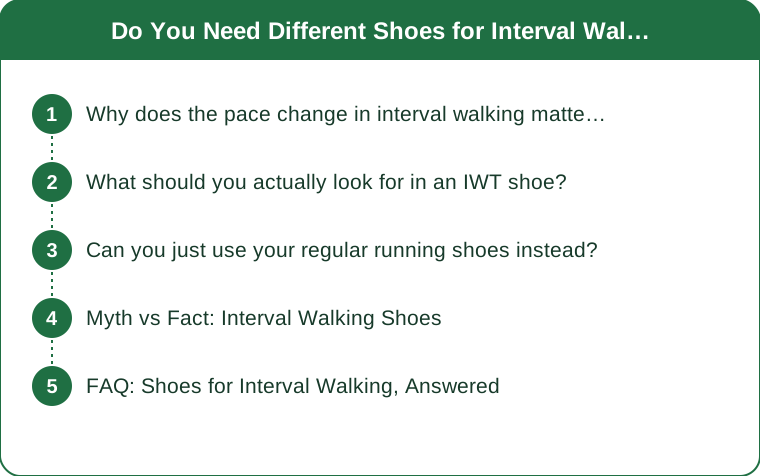
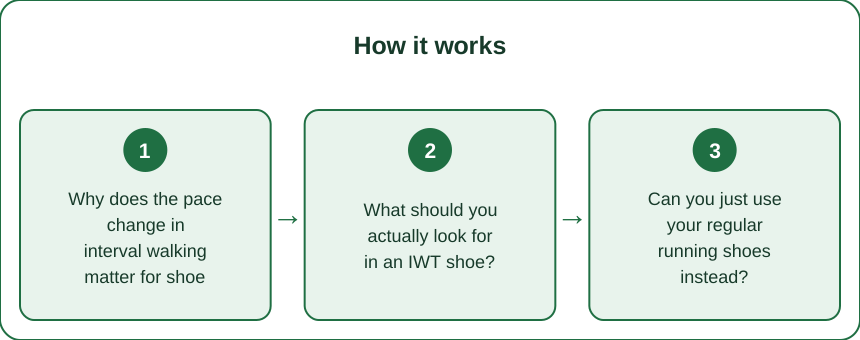
Why does the pace change in interval walking matter for shoe choice?
During the fast intervals, your foot strikes with more force and your stride shortens and quickens — closer to a light jog mechanic than a walking one. A shoe built purely for slow, steady walking often lacks the responsiveness to handle that repeated quick loading comfortably.
What should you actually look for in an IWT shoe?
Moderate cushioning with some responsiveness (not maximally soft, not minimalist), a secure heel lock to handle the pace transitions without your foot sliding, and enough flexibility in the forefoot for the quicker toe-off during fast intervals.

Can you just use your regular running shoes instead?
For most people, yes — a standard running shoe generally handles interval walking’s demands well, since it’s built for both faster movement and repeated impact. The mismatch usually runs the other way: a pure comfort/leisure walking shoe struggling with the fast intervals, not a running shoe struggling with the slow ones.
Myth vs Fact: Interval Walking Shoes
Myth: Any walking shoe works fine for interval walking. Fact: Shoes built purely for slow, steady walking often lack the responsiveness needed for the fast intervals specifically.
Myth: You need a specialized ‘IWT shoe’ — a real product category. Fact: A quality running-walking hybrid or running shoe covers the demands well; a dedicated IWT-branded shoe isn’t necessary.
Myth: More cushioning is always better for interval walking. Fact: Maximal cushioning can actually reduce the ground feedback needed for quick pace transitions — moderate, responsive cushioning tends to work better.
FAQ: Shoes for Interval Walking, Answered
How do I know if my current shoes are wrong for IWT?
If your feet feel unstable or your heel slips during the fast intervals specifically, that’s a sign your shoe’s heel lock or responsiveness isn’t matching the demand.
Do I need different shoes for treadmill IWT versus outdoor IWT?
Not usually — the pace demands are similar; outdoor terrain variability is the bigger factor if you’re on uneven ground.
How often should interval walking shoes be replaced?
Similar to running shoes: roughly every 300-500 miles, since the repeated fast-paced loading wears cushioning down faster than casual walking alone.
TL;DR:
- Fast intervals load your feet more like a light jog than a steady walk
- Look for moderate responsive cushioning, secure heel lock, and forefoot flexibility
- A standard running shoe usually handles IWT well — a pure leisure shoe often doesn’t
- Foot instability or heel slip during fast intervals is your sign to reassess your shoes
The slow intervals rarely cause shoe problems — it’s the fast ones worth shopping around.
See It in Motion
Seen here: High Waist Yoga Leggings with Inner Pocket — shop it on bubblelime.com
Keep Reading
This article is for general informational purposes only and is not medical advice. Always consult a qualified health professional for guidance specific to you.