Should You Do Interval Walking on Your Recovery Days?
Quick Answer: A gentler version of interval walking training — shorter fast intervals, more rest intervals, lower overall intensity — works well as active recovery, but a full-intensity IWT session (3-minute fast intervals at 70%+ effort) is too demanding for a true recovery day and should be treated as a regular training session instead.
The confusion comes from IWT looking mild on paper compared to running, when a proper session at full intensity is actually a real cardiovascular workout.

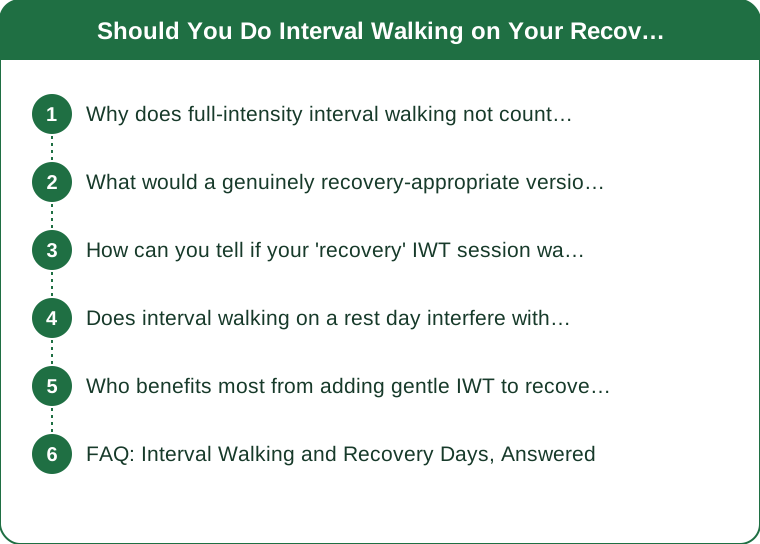
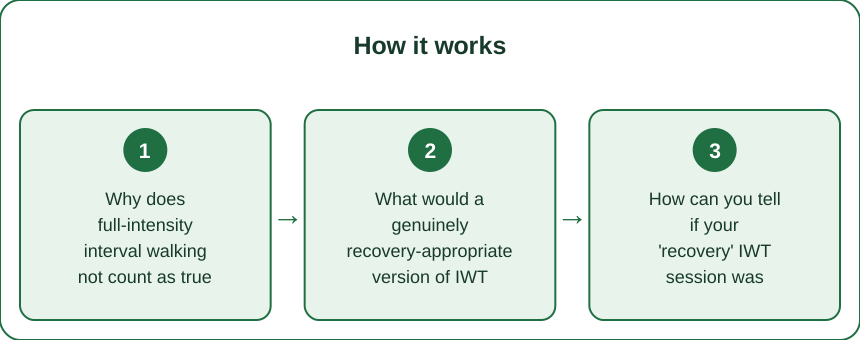
Why does full-intensity interval walking not count as true recovery?
A standard IWT protocol alternates 3 minutes of fast walking at roughly 70% effort with 3 minutes of slow walking, repeated 5+ times — that fast-interval effort level raises heart rate meaningfully and creates real training stress, similar in cardiovascular demand to easy jogging intervals. True recovery days are meant to let training adaptations happen and reduce cumulative fatigue, and a full-effort IWT session works against that goal even though it feels less intense than running.
What would a genuinely recovery-appropriate version of IWT look like?
A modified version — fast intervals at 50-55% effort instead of 70%, shorter fast intervals (90 seconds instead of 3 minutes), and fewer total rounds — keeps heart rate in a true active-recovery zone while still providing gentle movement benefits like improved circulation and reduced next-day stiffness. This isn’t the same protocol scaled down slightly; it’s a meaningfully different, gentler version.
How can you tell if your ‘recovery’ IWT session was actually too hard?
If you finish the session breathing harder than a conversational pace allows, or if you feel more fatigued the next day rather than fresher, the session crossed from recovery into training stress. A useful check: you should be able to hold a conversation during the fast intervals of a true recovery-day version — if you can’t, dial the effort back further.

Does interval walking on a rest day interfere with the next hard training day?
It can, if done at too high an intensity — the whole point of a recovery day is walking into your next hard session with reduced fatigue, and an overly intense ‘recovery’ walk undermines that by adding real cardiovascular and muscular stress. This is the main risk: treating IWT as automatically gentle because it’s ‘just walking,’ when the interval structure itself creates real physiological demand at higher effort levels.
Who benefits most from adding gentle IWT to recovery days, versus who should skip it?
People building a walking-based fitness base, or those returning from a break, often benefit from gentle IWT on recovery days since it adds structure without much added fatigue. People in a heavier lifting or running block, where true rest is the priority for adaptation, are usually better off with a completely easy walk or full rest instead, since even gentle intervals compete with recovery from the main training stimulus.
FAQ: Interval Walking and Recovery Days, Answered
How many days a week should full-intensity IWT be done?
Most research protocols use 4-5 sessions per week, treated as real training sessions rather than recovery, alongside 2-3 true rest or easy days.
Is walking-only recovery ever better than any form of IWT?
For heavier training blocks, yes — a fully easy walk without any intervals protects recovery more completely than even a gentle interval structure.
Can beginners start with gentle IWT on rest days before progressing to full sessions?
Yes, this is a reasonable entry point, gradually increasing interval intensity and duration as fitness improves over several weeks.
TL;DR:
- Full-intensity IWT (70%+ effort, 3-minute intervals) is real training, not true recovery
- A gentler version — 50-55% effort, shorter intervals — works well as genuine active recovery
- You should be able to hold a conversation during recovery-day fast intervals; if not, it’s too hard
- Heavier training blocks are usually better served by a fully easy walk instead
Interval walking’s reputation as ‘gentle’ comes from comparing it to running, not from the actual cardiovascular demand of a full-intensity session — treat the recovery-day version as genuinely different, not just a smaller dose.
See It in Motion
Seen here: Super High Waist Embossed Yoga Leggings with Inner Pocket — shop it on bubblelime.com
Keep Reading
This article is for general informational purposes only and is not medical advice. Always consult a qualified health professional for guidance specific to you.