Why Your Interval Walking Results Stalled — and the One Variable Everyone Forgets to Change
Quick Answer: Interval walking plateaus almost always because people keep the same speed ratio forever. Increasing the fast-interval pace (not just duration) every 3-4 weeks is what keeps the cardiovascular stimulus working — most people only ever add more minutes, which stops mattering fast.
Month one felt like magic — better energy, visible changes, easier stairs. Now you’re doing the exact same 3-minutes-fast, 3-minutes-slow routine and nothing’s moving. That’s not your body giving up. It’s your body fully adapting to a stimulus that stopped increasing.

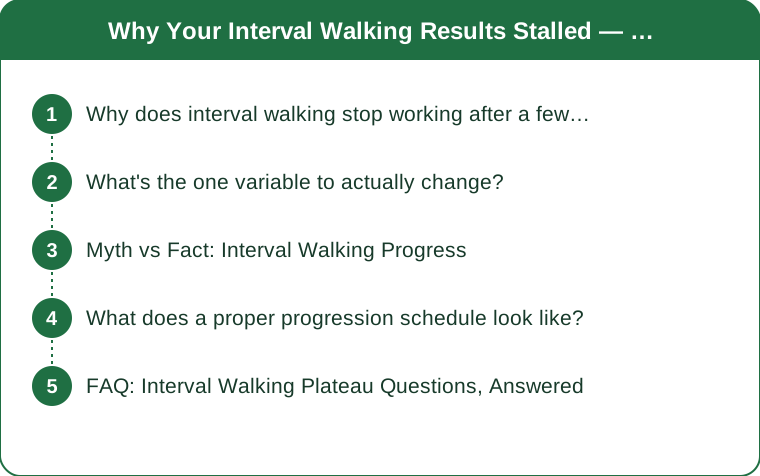
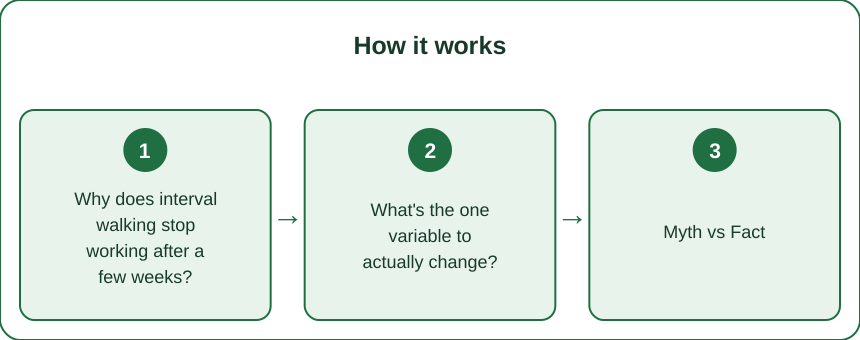
Why does interval walking stop working after a few weeks?
Because your cardiovascular system adapts to a fixed stimulus in roughly 3-4 weeks. If your fast interval is the same pace in week 8 as week 1, your heart and lungs have simply gotten efficient at exactly that pace — it no longer counts as a meaningful challenge.
This is the single most common interval walking mistake: people add more time instead of more intensity, and time alone doesn’t force the same adaptation.
What’s the one variable to actually change?
Fast-interval speed, not duration. Every 3-4 weeks:
- Bump your fast-interval pace until your breathing hits a genuine “can talk in short sentences only” effort
- Keep the ratio (e.g. 3 min fast : 3 min slow) the same — don’t change everything at once
- Use a simple talk-test: if you can chat in full sentences during the fast interval, it’s not fast enough anymore
This single swap is what separates people who keep progressing from people who plateau at month two.

Myth vs Fact: Interval Walking Progress
Myth: More total walking time equals more progress. Fact: Past a certain point, added slow minutes barely move cardiovascular fitness. Intensity of the fast interval is the real driver.
Myth: You should feel it get easier over time. Fact: If it’s getting easier at the same pace, that’s the adaptation signal to increase pace — not a sign to stay comfortable.
Myth: Interval walking is only for beginners. Fact: With progressive pace increases, interval walking research shows meaningful fitness gains in trained adults too, not just newcomers.
What does a proper progression schedule look like?
Weeks 1-4: Establish baseline — 3 min fast (moderate-hard) : 3 min slow, 5 rounds.
Weeks 5-8: Same structure, fast interval pace increases until talk-test hits ‘short sentences only.’
Weeks 9-12: Add one round (6 total) at the new pace before touching speed again.
Every 4th week: deload — same structure, easier pace, let adaptation consolidate.
Alternating a speed bump with a structure bump keeps both interesting and prevents overuse strain from constant intensity increases.
FAQ: Interval Walking Plateau Questions, Answered
How do I know if I’m actually plateaued or just tired?
Track 2 weeks of session data (pace, perceived effort, heart rate if available). True plateau shows flat numbers despite consistent effort; fatigue shows declining numbers with rising effort — those need rest, not intensity.
Should I increase speed or add more rounds first?
Speed first — it’s the variable most people neglect, so it usually has more room to move before rounds need to increase.
Is a plateau after 2 months normal?
Completely normal — it’s expected adaptation, not failure. The fix is a planned variable change, not starting over.
TL;DR:
- Plateaus happen because fast-interval pace stays fixed while your body adapts to it in 3-4 weeks
- Use the talk-test: full sentences during the fast interval means it’s too easy now
- Increase pace before adding more rounds or total time
- Deload every 4th week to let the adaptation actually consolidate
One variable, changed on schedule, restarts progress that felt permanently stuck.
See It in Motion
Seen here: Super High Waist Embossed Yoga Leggings with Inner Pocket — shop it on bubblelime.com
Keep Reading
This article is for general informational purposes only and is not medical advice. Always consult a qualified health professional for guidance specific to you.