Why Interval Walking Stopped Working After a Few Good Weeks
Quick Answer: Interval walking training (IWT) plateaus after 4-8 weeks for most people because the same fast-interval pace that once challenged your fitness now sits within easy aerobic capacity. Increase the fast-interval pace or duration, not just repeat the original protocol indefinitely.
The first month of interval walking training felt genuinely challenging and the results showed it — better energy, some fitness gains, maybe some weight change. Then, without you doing anything differently, progress just… stopped. That’s a predictable plateau, not a sign the method quit working.

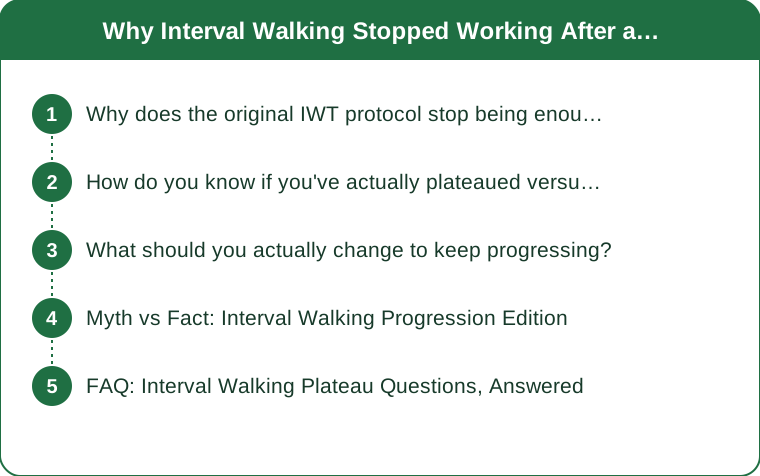
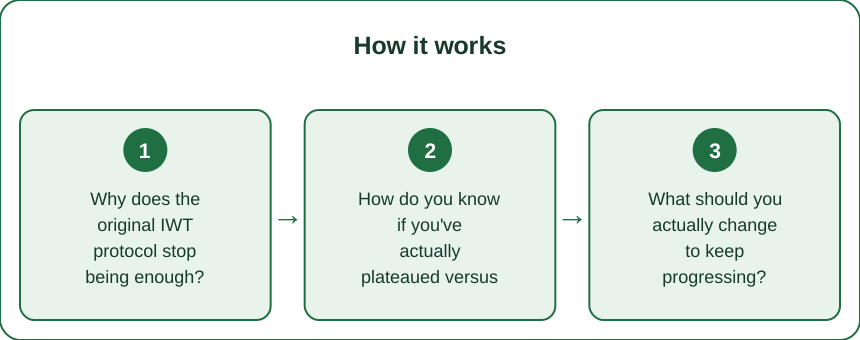
Why does the original IWT protocol stop being enough?
The classic protocol (3 minutes fast, 3 minutes slow, repeated) is calibrated to a starting fitness level. As your aerobic capacity improves over 4-8 weeks, that same ‘fast’ pace increasingly falls within your comfortable aerobic zone rather than pushing above it — the stimulus that drove initial adaptation quietly disappears.
How do you know if you’ve actually plateaued versus just having an off week?
Check your perceived effort during the fast intervals — if a pace that used to leave you breathless now feels sustainable and conversational, that’s the clearest sign the stimulus has faded, regardless of what the scale or fitness tracker says week to week.

What should you actually change to keep progressing?
Increase fast-interval pace first (the simplest lever), then consider extending fast-interval duration (from 3 to 4 minutes) or adding an extra set. Change one variable at a time — pace or duration, not both simultaneously — so you can track what’s actually driving continued adaptation.
Myth vs Fact: Interval Walking Progression Edition
Myth: The original protocol should be repeated indefinitely for maintenance. Fact: It works for initial adaptation, but ongoing progress needs periodic increases in intensity, same as any training method.
Myth: If you’re not more tired, you’re not progressing. Fact: Feeling less taxed at the same pace IS the progress — it just means the stimulus needs recalibrating upward to keep driving further adaptation.
Myth: More frequent sessions fix a plateau better than harder ones. Fact: Increasing intensity on existing sessions typically restarts progress faster than simply adding more sessions at the same, now-easier intensity.
FAQ: Interval Walking Plateau Questions, Answered
How often should I increase intensity in interval walking?
Reassess every 4-6 weeks — check whether the fast interval still feels genuinely challenging, and adjust pace or duration if it doesn’t.
Should I add more interval sets instead of increasing pace?
Either works, but increasing pace is usually simpler to implement and track than adding volume, especially if time is limited.
Is it normal to plateau this quickly with interval walking?
Yes — 4-8 weeks is a typical window for the original protocol to stop being challenging for most people who started at a moderate fitness level.
TL;DR:
- IWT plateaus after 4-8 weeks because your improved fitness outgrows the original pace
- Check if the fast interval still feels genuinely hard — if not, the stimulus has faded
- Increase fast-interval pace first, then duration — change one variable at a time
- Feeling less taxed at the same pace is progress, not failure — recalibrate upward
See It in Motion
Seen here: High Waist Jogger Sweatpants with Pockets — shop it on bubblelime.com
Keep Reading
This article is for general informational purposes only and is not medical advice. Always consult a qualified health professional for guidance specific to you.