Interval Walking Training in Winter: What Actually Changes About Your Gear
Quick Answer: Interval walking training (IWT) in cold weather needs breathable, moisture-wicking layers you can adjust mid-session rather than one heavy coat, since the fast intervals generate real heat while the slow-recovery intervals cool you down quickly — mismatched layering is the most common winter IWT mistake.
You bundle up like you’re just going for a regular winter walk, and halfway through your first fast interval you’re sweating uncomfortably inside a coat that felt perfect standing at the door. Interval training’s on-off intensity pattern needs a genuinely different layering approach than steady walking.

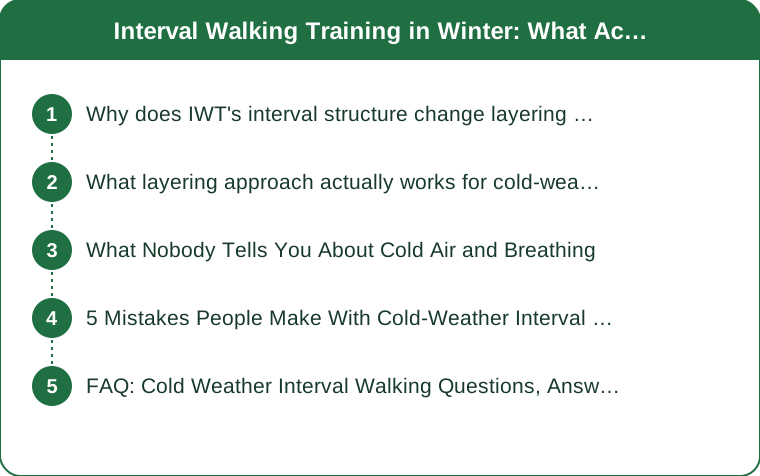
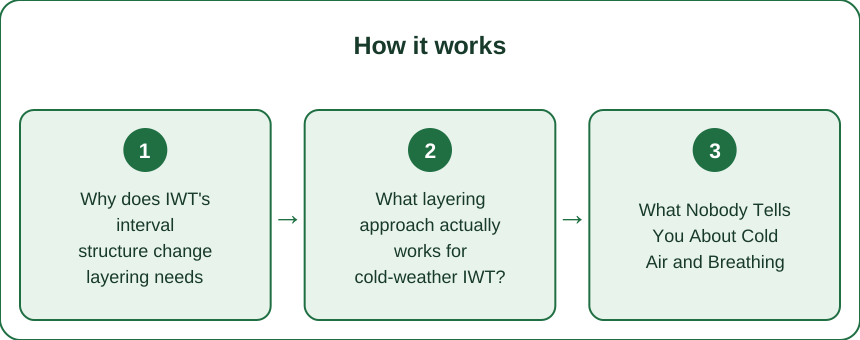
Why does IWT’s interval structure change layering needs specifically?
IWT alternates high-intensity fast intervals with slower recovery intervals, meaning your body temperature swings meaningfully within a single session — generating real heat during fast bouts, then cooling quickly during recovery bouts, especially in cold outdoor air. A single heavy coat suited to steady walking traps too much heat during fast intervals and doesn’t warm you enough during slow ones once you’re sweating.
This is different from steady-state cold weather walking, where body temperature stays relatively more constant and simpler single-layer bundling works reasonably well.
What layering approach actually works for cold-weather IWT?
A three-layer system you can adjust mid-walk: a moisture-wicking base layer, a light insulating mid-layer (like a light fleece or vest), and a windproof but breathable outer shell — with the ability to unzip or partially remove the outer layer during fast intervals and re-layer during recovery. Full-zip layers, rather than pullover styles, make these mid-session adjustments actually practical rather than an ordeal.
Hands, ears, and extremities still need consistent protection throughout, since blood flow prioritizes core temperature over extremities during effort — meaning fingers and ears can get cold even while your core feels overheated mid-interval.

What Nobody Tells You About Cold Air and Breathing
Cold, dry air can trigger airway irritation and a coughing sensation during hard intervals more than during steady walking, since the faster breathing rate of fast intervals pulls in more cold air more quickly. A light buff or scarf loosely covering the mouth and nose during fast intervals — not tightly, just enough to pre-warm inhaled air slightly — genuinely helps for people sensitive to this.
This effect is often mistaken for general fitness limitation (‘I can’t push as hard in winter’) when it’s actually a specific cold-air airway response, distinct from cardiovascular fitness itself.
5 Mistakes People Make With Cold-Weather Interval Walking
1. Wearing one heavy coat without layers that adjust mid-session.
2. Not protecting hands and ears despite feeling warm from the core-focused effort.
3. Skipping a warm-up walk before the first fast interval, going straight into intensity in cold muscles.
4. Ignoring ice or uneven footing risk during fast intervals, where a slip risk is higher than during a steady walk.
5. Cutting sessions short due to cold discomfort rather than adjusting gear, and losing training consistency as a result.
FAQ: Cold Weather Interval Walking Questions, Answered
Is it safe to do fast-interval walking outdoors in freezing temperatures?
For most healthy people, yes with proper layering and footing precautions, though extreme cold or icy conditions may warrant moving the session indoors (treadmill or mall walking).
Should recovery intervals be shorter in cold weather to avoid getting chilled?
Some people find slightly shorter recovery intervals or adding light arm movement during recovery helps maintain enough warmth without compromising the interval structure’s purpose.
Do I need special traction footwear for winter interval walking?
If your route includes icy or uneven surfaces, winter-specific traction soles are worth it, particularly since interval walking’s faster pace increases fall risk on slick ground compared to a slower steady walk.
TL;DR:
- IWT’s alternating intensity needs adjustable layers, not one heavy winter coat
- A three-layer system with zips you can open during fast intervals works best
- Cold, dry air can irritate airways during hard efforts — a light face covering helps
- Protect hands and ears even when your core feels warm from effort.
See It in Motion
Seen here: High Waist Yoga Leggings with Side Pockets — shop it on bubblelime.com
Keep Reading
This article is for general informational purposes only and is not medical advice. Always consult a qualified health professional for guidance specific to you.